Danny Plom / Comedian, actor and writer
Danny Plom Is Bringing His Own Story to The Comedy Store
The Cambodian American comedian has spent years turning cultural collision, friendship and the absurdity of his own upbringing into comedy. Now he is bringing that voice to a headlining night at The Comedy Store's Belly Room on December 18.
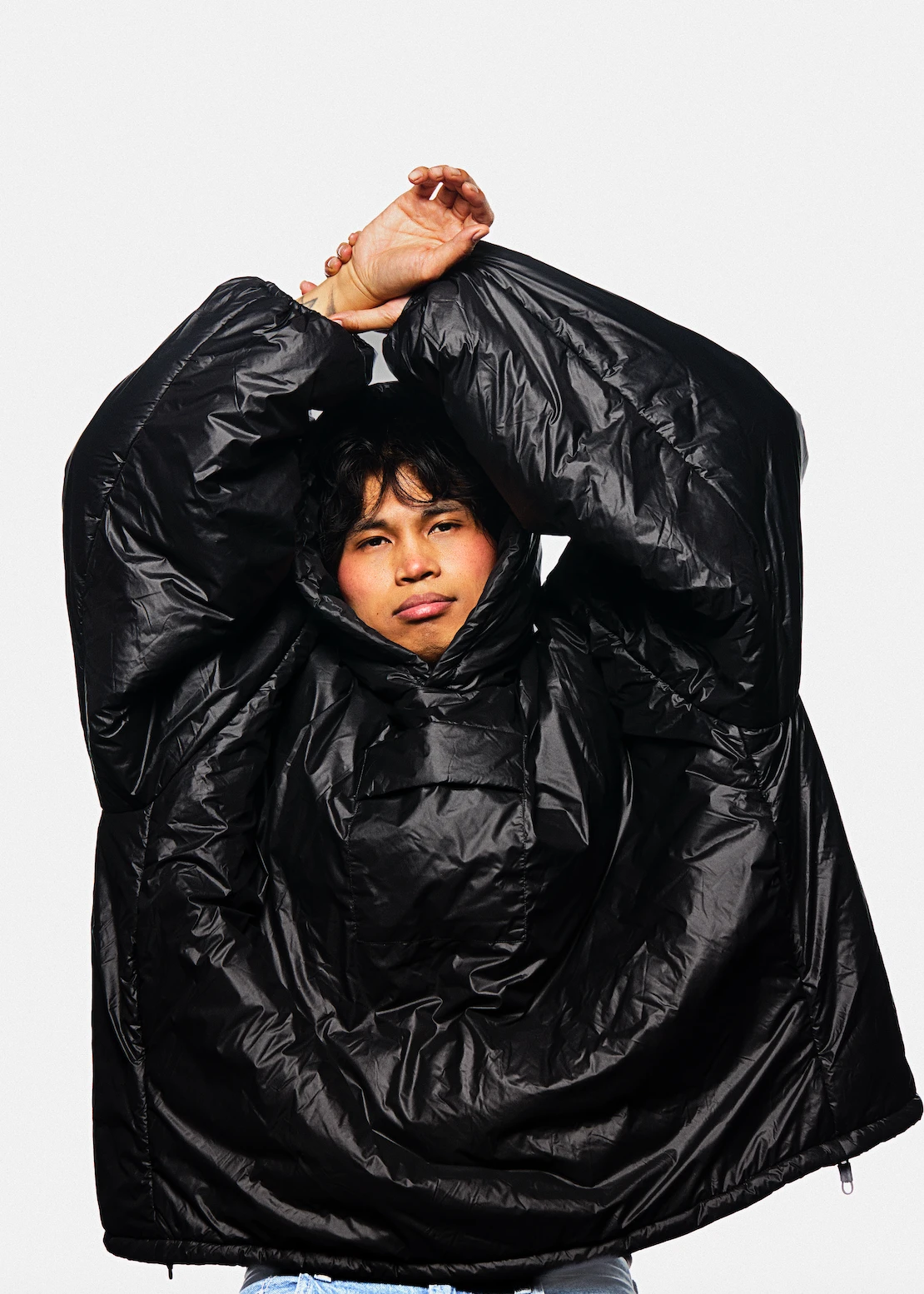
Before Danny Plom was thinking about stand-up specials, television roles or whether an audience would follow him beyond a thirty-second clip, there was Seattle.
There was his grandmother.
And there was a bucket and a soup bowl.
Plom was raised largely by his Cambodian grandmother after his parents separated when he was young. She had survived the Khmer Rouge, immigrated to America and eventually found herself raising a kid whose problems were considerably different from her own.
"She barely spoke English, I was supposed to be translating things for her, and half the time I had no idea what was going on either," Plom remembers.
He describes the two of them as people from completely different generations trying to understand America together.
Danny was concerned with video games.
His grandmother was concerned with survival.
And somewhere between those things, he became funny.
Growing up, Plom didn't necessarily know that his household was unusual. A Cambodian immigrant home was simply home. The food, the language, the temple, older Cambodian people around him, his grandmother's discipline and her refusal to waste anything were normal parts of life.
So was bathing with a bucket and a soup bowl.
It wasn't until visiting another kid's house that Plom discovered showers were apparently something people just stood underneath.
That gap - between what a child accepts as completely ordinary and what an adult realizes was absolutely insane - would eventually become one of the engines of his comedy.
Plom's work is full of those collisions.
Cambodian and American.
Family and independence.
The internet and the comedy club.
The version of yourself an audience meets and the person who goes home afterward.
"I never want the joke to just be, 'look how Asian this is,'" he says. "I want it to come from something I actually experienced."
That distinction matters.
Plom has increasingly embraced his Cambodian identity onstage, but he doesn't treat representation like homework. The specificity is the point. Cambodian people might recognize the experience immediately; everyone else should still recognize the family underneath it.
"If people are laughing because they relate to it and not just because I'm Asian, then I think I'm doing my job."
Finding the Voice
Growing up, Plom absorbed comedy from everywhere.
Dave Chappelle. Kevin James. The King of Queens. Smart Guy. A healthy amount of Disney Channel.
Later came Jerrod Carmichael, Jermaine Fowler and Michael Che.
What connected all of them for Plom wasn't necessarily style. It was ownership. Each performer seemed to understand exactly who they were when they walked onstage.
That would take Danny longer.
He moved from Seattle to Los Angeles in 2017 to pursue comedy seriously, entering a city full of people who had made the same decision.
LA has a brutal way of clarifying things.
Being funny is not particularly rare here.
Having a voice is.
"When I first moved to LA, I think I was still figuring out what my voice even was," Plom says. "You get here and there are thousands of funny people, so you realize pretty quickly that just being funny isn't enough."
The shift came when he stopped trying to manufacture what a comedian was supposed to sound like and began pulling harder from what only he could know.
His grandmother.
Cambodian America.
Dating.
Seattle.
Family dysfunction.
The cultural misunderstandings that are funny precisely because nobody involved thinks they are strange.
His stand-up about being Cambodian began circulating online, and something changed. People weren't only finding Danny through internet comedy anymore. They were finding his story.
Cambodian viewers started approaching him after shows and messaging him online.
For someone who grew up without many Cambodian entertainers to point toward, suddenly becoming one himself carries a strange weight.
"I never started comedy thinking I was going to represent Cambodian people," he says. "I was literally just trying to be funny and get stage time."
He still resists the idea that one artist can somehow represent an entire culture.
The ambition is simpler.
Tell the truth about his own experience.
Be good enough that people keep watching.
Make a Cambodian face appearing in comedy, film and television feel a little less unusual the next time.
Two Noodles
Then there is Willie Macc.
Danny met Willie at a backyard comedy show shortly after arriving in Los Angeles. Willie was already moving through the comedy world and, as Danny tells it, took him under his wing.
The friendship came before the content.
That part is important.
Eventually, their friendship became AfroNoodles, built around the collision between a Black American comedian and a Cambodian American comedian who realized their cultures could somehow be completely different and disturbingly similar at the exact same time.
One of them would explain something from childhood.
The other would stare.
Then occasionally: Wait. Y'all did that too?
The premise works because neither man appears particularly interested in pretending cultural differences don't exist.
They run directly toward them.
"Because we're actually friends, we can ask each other questions that people might normally be scared to ask," Danny says. "The joke isn't really that one culture is weird. It's that both of our cultures are weird in completely different ways."
And I got to watch a small part of that relationship form in real time.
I was still in high school when I was hanging around Flappers in Burbank, learning comedy wherever anybody would let me learn it. Josh Snyder and Paul Moomjean were important early voices for me. Willie Macc was already killing it, selling out shows while I happily rode the coattails whenever possible.
Danny and I met somewhere inside that world.
Before every funny person needed to have a "content strategy," we were standing around parking lots figuring out how to turn bits that might have died onstage into something people would actually watch on Musical.ly and early TikTok.
Sometimes the bit was trash.
Then somehow the video smashed.
We struck gold a couple of times during that strange little period when going viral still felt almost accidental.
I also spent an embarrassing amount of time trying to figure out how I could get myself involved in the AfroNoodles movie Danny and Willie were developing.
Some ambitions apparently arrive early.
After the Viral Moment
Plom understands the internet well enough to know its central trick:
Attention can look a lot like a career from a distance.
They are not the same thing.
"I don't want to just be known for clips," he says.
That may be the most revealing thing he told me.
The goal now is translation.
Can the person who watches a stand-up clip buy a ticket?
Can the follower become an audience?
Can the comedian become an actor without audiences waiting for the punchline?
Can the creator eventually become the person who creates the entire project?
Plom has already begun crossing some of those borders. His acting credits include ABC's Station 19 and the feature A.I., and as a comedian he has performed at rooms including the Laugh Factory and The Comedy Store.
But acting, to him, isn't simply another version of comedy.
He wants to get genuinely good at it.
In fact, one of the things he wants most is the opportunity to play against expectation - something restrained, dramatic or complicated enough that the audience briefly forgets about the comedian they already know.
"I want that moment where someone watches something I'm in and goes, 'Wait, Danny can actually act?'"
Then, perfectly on brand:
"That would be nice. Slightly disrespectful, but nice."
He is also building his first full stand-up hour, wants to tour more seriously and is developing film and television ideas drawn from his Cambodian American family and upbringing.
Five years from now, his ideal version of success includes a special he actually likes, touring, substantial acting work and projects of his own.
But there is one requirement.
It still has to be fun.
"If I can make things I actually care about, take care of the people I love, have an audience that wants to follow me into whatever I do next and still have time to play video games, I'm good."
It makes sense that the person audiences experience as relentlessly social describes himself as an introvert.
Stand-up Danny is amplified.
Internet Danny is reactive.
Actual Danny apparently wants everyone to leave him alone long enough to watch anime.
"Which is unfortunate," he says, "because I chose a career where my entire job is basically 'please look at me.'"
Maybe that contradiction is the thing.
Danny Plom's career has never really been about making himself easier to explain.
It works because so many different things are allowed to exist together.
The grandson of a Khmer Rouge survivor and the kid playing video games in Seattle.
The Cambodian kid discovering showers at somebody else's house.
The introvert becoming a stand-up comedian.
The internet creator who doesn't want the internet to be the ceiling.
The Asian comedian and his Black best friend discovering that their families were somehow both completely different and exactly the same.
The viral guy who wants to become a real actor.
The comedian trying to build something serious without becoming so serious that it stops being funny.
Maybe that is what Danny is actually trying to prove to himself now.
Not that he can get attention.
He already did that.
He wants to know how far the thing can go.
And as somebody who has known him through several versions of the experiment, I'm excited to find out too.
Danny also helped me with a self-tape recently - one small example in a long history of him showing up for the people around him. So beyond the profile, let this be a public thank-you for the years of friendship, laughs, advice and support.
The Next Room
Now that next step has a date.
On Friday, December 18, 2026, at 7:30 p.m., Danny Plom will headline the Belly Room at The Comedy Store in Los Angeles.
For a comedian asking whether the people watching his clips will follow him into a room, this is a chance to make the question tangible. A night on the calendar. His name on the show. An audience coming to hear what he has to say.
The story that started with his grandmother in Seattle is still the story. The room is getting bigger.
Keep going.
Power to you, brother.
— Reed Shannon
See Danny Plom live: Friday, December 18, 2026, at 7:30 p.m. in the Belly Room at The Comedy Store. 21+; two-drink minimum.
Tickets and official show details →
Original reporting: Danny Plom's written responses to RSO, September 18, 2026.